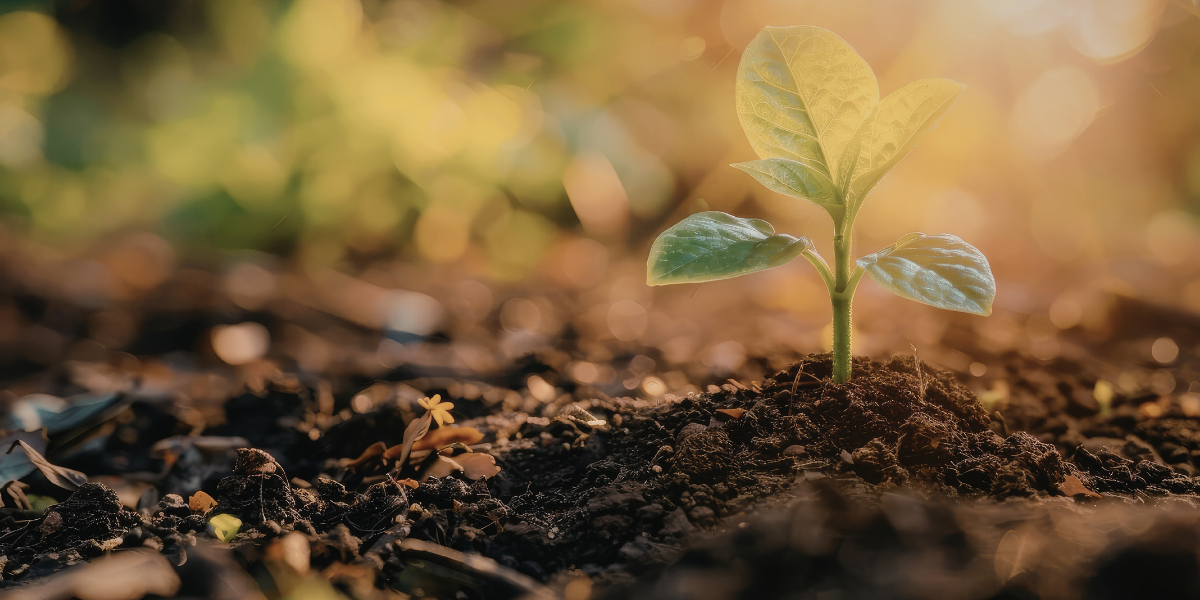
Across Africa, food security is often discussed in terms of production — how to grow more food, faster, and at lower cost. But a deeper truth is emerging among agricultural leaders and community practitioners: lasting food security does not begin with crops. It begins with soil.
Healthy soil is the foundation of resilient food systems. Yet decades of reliance on chemical fertilizers, monocropping, and land degradation have left many African farming communities struggling with declining yields, poor soil fertility, and increasing vulnerability to climate shocks. In regions where livelihoods depend directly on the land, this creates a cycle of insecurity that affects not only food availability but also economic stability, health outcomes, and educational opportunities.
Regenerative organic farming offers a transformative solution. Unlike conventional approaches that focus primarily on short-term yield increases, regenerative methods rebuild the natural ecosystem beneath our feet. Practices such as composting, crop rotation, mulching, intercropping, and organic soil amendments restore microbial life, improve water retention, and strengthen soil structure. Over time, these practices increase productivity while reducing dependence on expensive external inputs.
For smallholder farmers — who produce the majority of Africa’s food — this shift is especially powerful. When farmers can rely on locally available organic inputs instead of imported chemicals, they gain economic independence. Their costs decrease, their resilience to drought improves, and their ability to provide consistent food for their families and communities increases significantly.
Beyond environmental benefits, regenerative farming also supports long-term social stability. Healthy soil leads to stable harvests, which reduce hunger, improve child nutrition, and enable families to invest in education rather than emergency survival. Communities that adopt organic practices often see stronger collaboration, knowledge sharing, and local leadership development.
At Paradise Natural Living Society, this connection between soil health and human wellbeing is central to our mission. Through hands-on training, community demonstration gardens, and education programs, we empower farmers and youth with practical regenerative skills that build both ecological and economic resilience.
Food security cannot be achieved through technology alone. It requires restoring the natural systems that sustain life — starting with the soil itself. By investing in regenerative organic agriculture today, we are not only growing food. We are cultivating stability, health, and opportunity for future generations.